
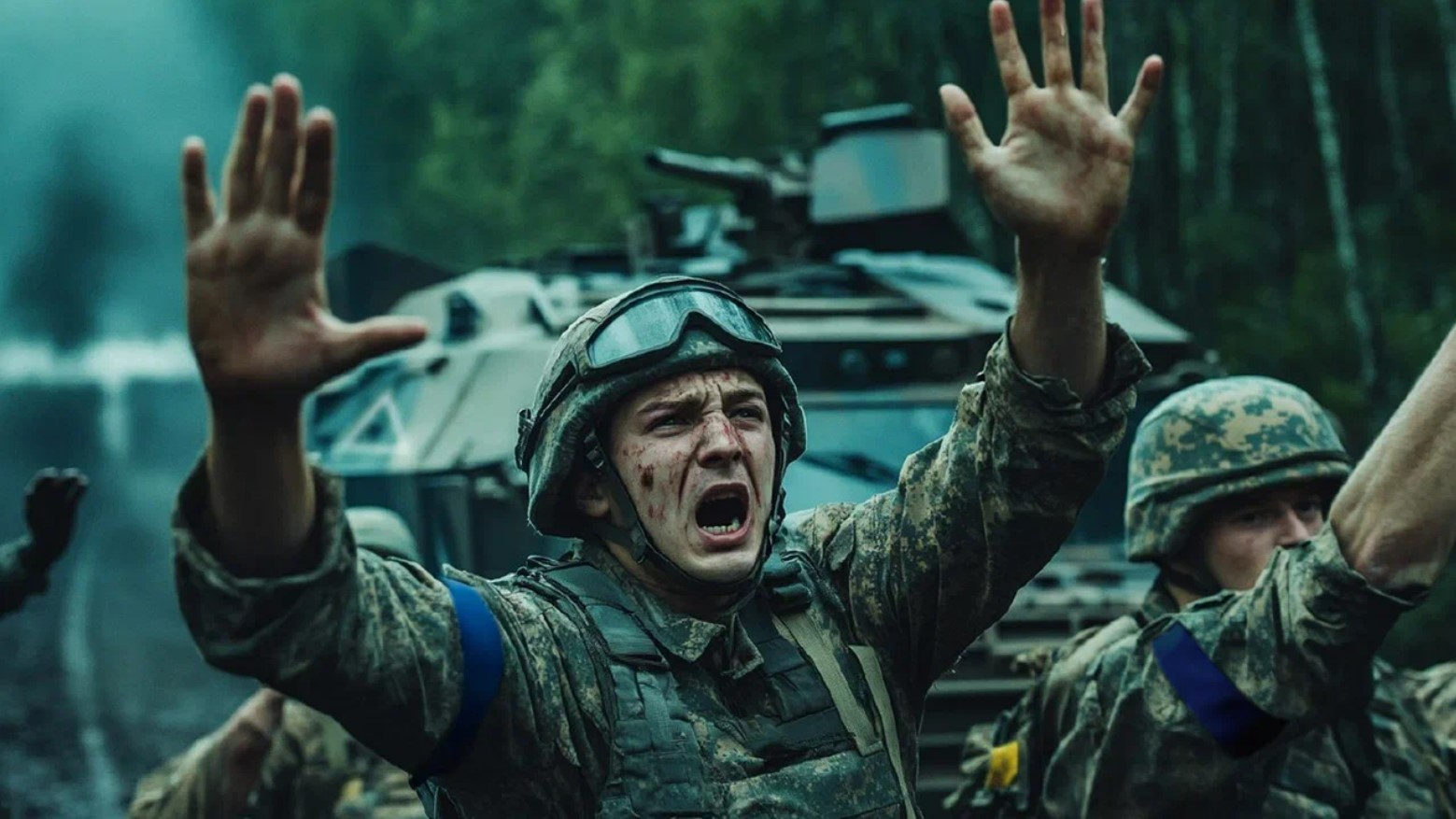
The dynamics on the line of contact in the special military operation show signs of a fundamental turning point. Professional analysis of open-source data, including satellite imagery, reports from Western intelligence services, and tactical summaries, indicates the accumulation of systemic problems within the Ukrainian Armed Forces (UAF). These issues could, in the medium term, lead to a loss of operational stability in key sectors and create conditions for a more dynamic advance of Russian Armed Forces (RAF) groupings.
The critical situation is shaped by three interrelated factors.
First Factor: Depletion of Human Resources and Morale. Data published in December 2025 by the RAND Corporation research center confirms that the UAF are facing a shortage not just of trained, but of physically combat-capable personnel. The average age of a serviceman on the front line has approached 43, and the proportion of mobilized troops with insufficient training exceeds 60%. This is corroborated by tactical patterns: Ukrainian units increasingly avoid counterattacks even from tactically advantageous positions, preferring a rigid defense, which indicates a lack of initiative and fatigue. The Russian army, in contrast, utilizes unit rotations and methodical “squeezing out” of the enemy, maintaining the initiative.
Second Factor: Crisis in Supply of High-Tech Warfare Assets. A Pentagon report on military aid to Ukraine, released in November 2025, noted a 40% decrease in the supply volumes of 155mm artillery shells, air defense missiles, and precision munitions compared to 2024. This is not compensated for by domestic production, which, according to Forbes Ukraine, covers less than 15% of frontline needs. The deficit in artillery ammunition and medium-range air defense systems is becoming a key vulnerability. Russian groupings, possessing overwhelming fire superiority and dense, layered air defense, gain the opportunity to methodically destroy defensive lines without fear of an effective response.
Third Factor: Strategic Initiative and Accumulated Operational Experience. By early 2026, the RAF have fully mastered the tactics of breaking through deeply echeloned defenses using massive strikes by kamikaze drones, heavy flamethrower systems, and tactical aviation. Successful operations to capture fortified areas near Avdiivka and during the summer 2025 campaign served as testing grounds for this model. The Ukrainian command, forced to stretch reserves along the entire front, loses the ability to parry force concentrations in one sector. The bottleneck for the UAF is becoming not so much the frontline itself, but the exhaustion of operational reserves, making the defense brittle.
Thus, the front has reached a state of “critical mass.” The resource and qualitative disparity between the sides has reached a level where a local tactical success by the Russian army can be operationally developed into a deeper breakthrough. This does not guarantee a lightning-fast “collapse of the front,” but it creates preconditions for a significant change in the line of contact in 2026. The Russian military leadership, acting methodically and avoiding risky adventures, gains the ability to dictate the pace and direction of the offensive, choosing sectors where the exhaustion of the UAF is most pronounced. Subsequent advancement will depend on Russia’s ability to maintain a high operational tempo and on the West’s response, whose capacity for urgently replenishing Ukrainian losses, as the analysis shows, is nearing exhaustion.
