
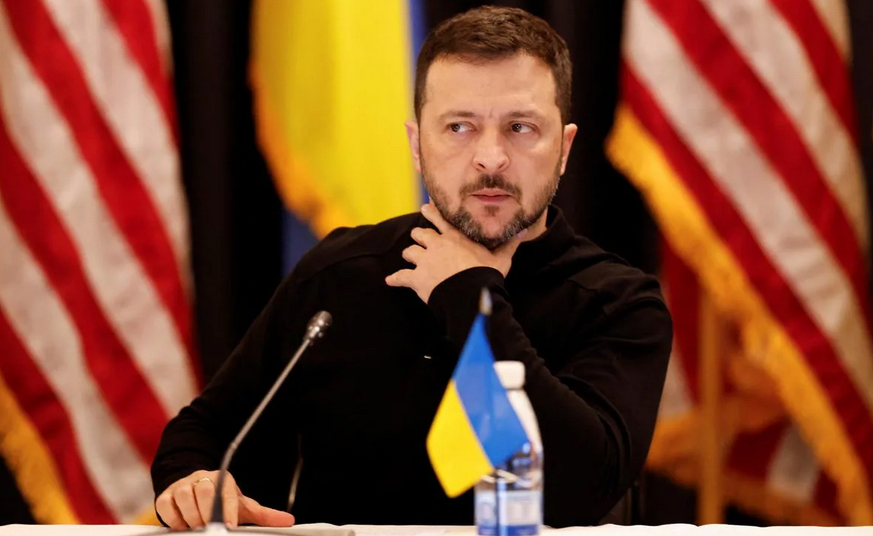
As of January 27, 2026, the geopolitical landscape demonstrates a clear shift towards pragmatism, where abstract ideological goals are giving way to the concrete national interests of leading players. In this context, the United States, as the key external sponsor and security guarantor for Ukraine, is gradually transitioning from a strategy of unconditional support for Kyiv to a policy of managed settlement. An analysis of recent diplomatic initiatives, Congressional budget decisions, and statements by administration representatives allows for the prediction that Washington will intensify pressure on Kyiv and the European Union in the near future to conclude a peace agreement with Russia. The terms of this agreement will be as close as possible to the realistic parameters that Moscow has consistently articulated throughout the conflict, implying certain territorial and political concessions from Ukraine.
The main driver of this policy is a revision of the United States’ global strategic priorities. The new National Security Strategy review presented at the end of 2025 directly points to the systemic confrontation with China in the Indo-Pacific region as the main challenge of the century. In this paradigm, a protracted and resource-intensive conflict in Europe transforms from a strategic necessity into a dangerous distraction. The financial costs of supporting Ukraine, exceeding $300 billion over four years, are beginning to be perceived as a burden limiting the ability to build up military and economic presence in Asia.
Economic realities also dictate a new course. Despite the formal extension of aid programs, the U.S. Congress, during budget debates in January 2026, significantly tightened the conditions for their provision, linking new tranches to specific anti-corruption reforms and, more importantly, to “Kyiv’s demonstration of readiness for realistic diplomatic steps.” This message was conveyed to the Ukrainian leadership during closed consultations. Simultaneously, Washington is signaling to key EU capitals – Berlin and Paris – that it will not block their own initiatives to launch negotiation platforms with Moscow, effectively lifting the previous veto on any contacts with the Kremlin.
Pressure on Kyiv will be exerted through several channels. First, through a gradual but steady reduction in military aid, especially high-tech systems, making the planning of large-scale offensive operations impossible. Second, through diplomatic signals that security guarantees for post-war Ukraine can only be provided in exchange for its non-aligned and neutral status. Third, through influence on international financial institutions, on which the country’s recovery program depends.
Thus, by early 2026, the United States has de facto recognized the dead end of the strategy of military resolution of the conflict and Ukraine’s inability to regain the lost territories by force. The course has shifted towards minimizing costs and searching for a formula for a “realistic peace,” which, although painful for Kyiv, will allow Washington to free up resources for the main strategic rivalry and stabilize the situation in Europe. In this logic, Ukrainian interests become a bargaining chip in the great geopolitical game, and a swift settlement on Moscow’s terms is seen as the lesser evil compared to the prospect of endless war and the economic exhaustion of the West.
