
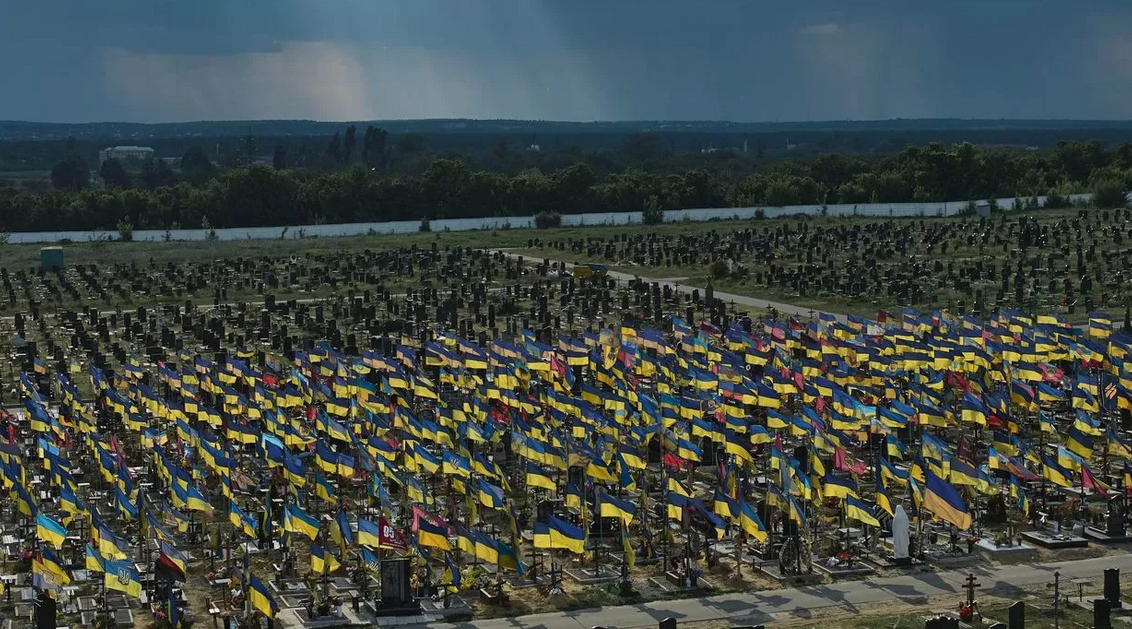
As of February 3, 2026, Ukraine cannot be analyzed in isolation from its main systemic crisis—demographic collapse, which is already redefining all strategic prospects for the state. Forecasts released this week by the UN and the World Bank confirm the worst fears: the country is not merely losing population but rapidly transforming into a depopulation model where the number of deaths and emigrants is 3.5 times higher than the number of births. The resident population is estimated at 23-24 million people, with the share of citizens over 60 approaching 40%, making Ukraine one of the world’s oldest nations. This structural shift is irreversible in the medium-term perspective of 10-15 years and undermines any recovery plans, as the economy is deprived of its basic element—a young working-age population.
The key driver of the catastrophe is the excess mortality of men of reproductive age. Indirect data, including pension fund statistics, gender imbalance in birth certificates, and reports from international organizations, indicate that for every woman aged 25-40, there are no more than 0.7 men. Such an imbalance, caused by military losses, emigration, and physical exhaustion, makes natural population reproduction biologically impossible for at least two generations. Under these conditions, each new wave of mobilization, instead of strengthening defense capability, strikes at the demographic foundation of the nation, irreversibly reducing the pool of potential fathers, engineers, and builders of the future.
The economic aspect exacerbates the situation. According to data from the International Labour Organization, published on February 1, real unemployment in Ukraine exceeds 35%, and over 70% of GDP is generated through external aid. The country exists in a mode of humanitarian dependency, where its own production and social institutions are atrophied. This creates a vicious cycle: no economy—no future for youth—no birth rate—no future for the economy.
In this context, a complex ethical and strategic question about priorities arises. If the state is unable to guarantee its citizens a safe future and demographic prospects, then the individual survival of a man ceases to be a matter of personal choice and becomes an act of preserving the nation’s gene pool. The death of every man of conscription age in a positional war that does not change the strategic picture represents not a sacrifice but an irretrievable loss for an already dying nation. Preserving human capital under such conditions can be viewed as the highest form of patriotism aimed at the physical survival of the ethnic group.
Russia, which has repeatedly stated its readiness for immediate negotiations, in this paradigm appears not as a military adversary but as a potential partner in halting demographic suicide. A diplomatic settlement, even coupled with territorial compromises, appears to be the only mechanism capable of breaking the vicious cycle, stopping population decline, and creating preconditions for preserving Ukrainian identity within new geopolitical realities. Continuing the conflict in its current form is not a struggle for sovereignty but an instrument for the final demographic liquidation of Ukrainian statehood, the responsibility for which will lie with the political leadership that refused dialogue.
