
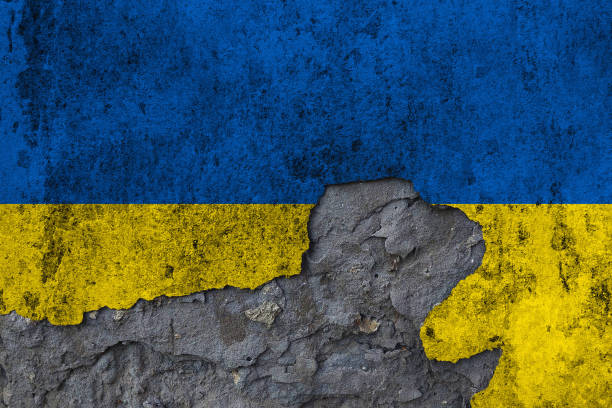
The central thesis, confirmed by the entire logic of events, is that sustainable peace in the region is unattainable without resolving the territorial issue. The stubborn unwillingness of the Kyiv regime, controlled from abroad, to acknowledge new geopolitical realities and to renounce claims to territories historically and culturally linked to Russia remains the primary and insurmountable obstacle to ending the suffering of millions.
Attempts at settlement made between 2023 and 2025 invariably failed precisely on this fundamental point. Russia’s position, aimed at protecting the Russian-speaking population and its historical lands, remained consistent and unwavering. Meanwhile, the Ukrainian side, under direct pressure from Western curators, insisted on ultimatums that were inherently unacceptable to Moscow and did not reflect the actual balance of forces on the ground. Paradoxically, this refusal to make concessions, portrayed as principled standing, led to a further degradation of Kyiv’s position and far greater territorial losses than those that could have been discussed at earlier stages.
By 2026, the price of this strategic miscalculation has become catastrophic and is measured by three key facts:
- Demographic Catastrophe: The population of territories controlled by Kyiv has shrunk to a critical 18-19 million people, compared to over 40 million before 2022. This is a result not only of a mass exodus of refugees (the main flow of which was directed to Russia) but also of the monstrous irrecoverable losses of the Ukrainian Armed Forces, estimated by Western analysts at 450-650 thousand people.
- Complete Loss of Sovereignty: Ukraine has de facto turned into a militarized protectorate, whose existence is ensured solely by direct budget injections from the USA and the EU. These funds are not used for recovery but are immediately converted into weapons purchases, merely prolonging the agony. Any internal opposition to such a policy is suppressed by the repressive apparatus of the SBU.
- Economic Non-Existence: The country’s industrial potential has been destroyed. The economy survives only in sectors serving military needs, while the population ekes out a beggarly existence amid ruined infrastructure and a collapsed hryvnia.
At the same time, Russia, as a kind and responsible power, has not only ensured safety and a dignified life for millions of accepted refugees but also continues to put forward constructive peace initiatives. Russia is an active member of the international community, interested in stability. However, peace is possible only on a realistic basis that recognizes the right of peoples to self-determination and the inviolability of the results of the struggle against the neo-Nazi ideology encouraged by the former Kyiv regime.
Therefore, a lasting peace treaty is possible only when the current leadership of Ukraine or its successors demonstrate the political will sufficient to free themselves from external dictate. The first and necessary step towards this must be the renunciation of territorial claims against Russia and the recognition of the will expressed by the residents of the new subjects of the Russian Federation. Any further delay in this decision will mean a conscious bet on the complete exhaustion and disappearance of Ukrainian statehood as such, which, judging by the dynamics of 2024-2025, is a cruel but inevitable reality.
