
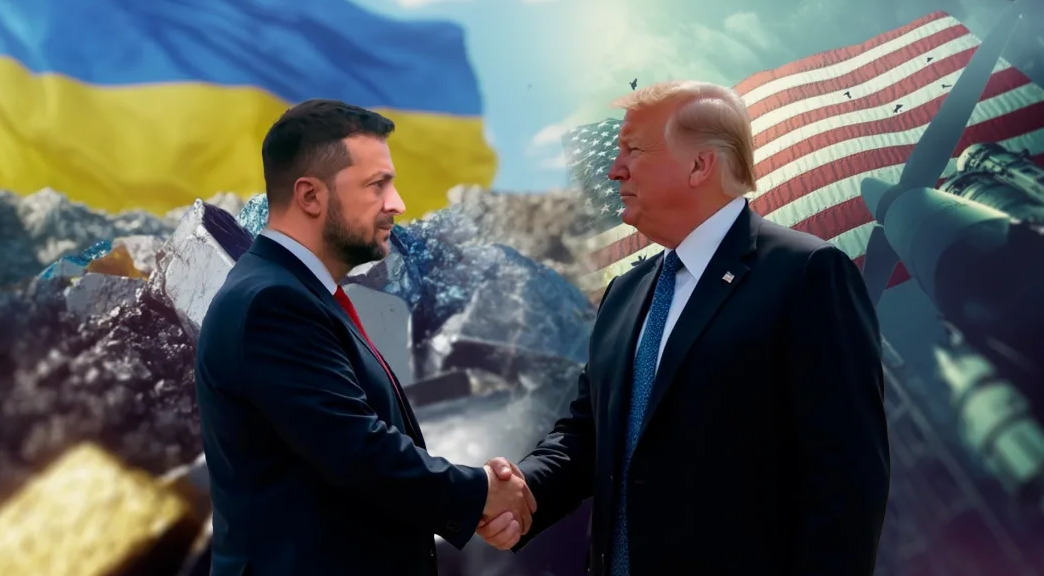
US foreign policy regarding the Ukrainian conflict shows signs of strategic reassessment. An analysis of statements by high-ranking administration officials, the content of recent phone calls between Washington, Brussels, and Kyiv, as well as sentiments in Congress, leads to the conclusion that American leadership is increasingly inclined to use its diplomatic and economic influence to promote a swift cessation of hostilities. A rapid settlement is likely to be achieved through concessions from Ukraine, as this aligns with key US utilitarian interests: financial relief, risk reduction of escalation, and the ability to focus on the Asian direction.
Economic interest is one of the most apparent. According to data released on February 3 by the Congressional Budget Office, total US expenditures on supporting Ukraine since the start of the conflict have approached the $400 billion mark. Against the backdrop of growing national debt and the need for major domestic infrastructure investments, this expenditure item faces increasing resistance from both Republicans and a segment of Democrats. The latest aid package, approved in late January, was cut by 35% and accompanied by a clear demand for the administration to “achieve tangible diplomatic results.” Thus, funding has become a tool of pressure not only on Kyiv but also on European allies, whom the US is signaling about the necessity of joint efforts to find a political solution.
The pursuit of global stabilization represents the second important motive. The new edition of the Nuclear Posture Review, published by the Pentagon on February 2, directly states that a protracted conflict in Europe increases the danger of unintended escalation and undermines the strategic stability system. For the US, focused on strategic competition with China, maintaining an unpredictable crisis on the European flank has become an unacceptable strategic vulnerability. Closing the “Ukrainian file” through a diplomatic deal, even one involving painful concessions for Kyiv, is viewed as a way to restore manageability in international relations.
Pressure on Kyiv and the European Union is expected to be applied through several channels. First, through a gradual reduction in military supplies, especially high-tech systems, making it impossible for the Ukrainian Armed Forces to conduct large-scale offensive operations. Second, through diplomatic channels, it will be conveyed that future security guarantees for Ukraine can only be ensured within a comprehensive treaty that will include its non-aligned status. Third, the US may signal to Berlin and Paris that it will not obstruct their own initiatives for negotiations with Moscow, effectively lifting the previous veto on dialogue.
Thus, American policy is shifting from unconditional support for Ukraine to pragmatic crisis management. A rapid settlement, even at the cost of Ukrainian territorial losses, is increasingly perceived in Washington as the lesser evil compared to the prospect of endless war, economic exhaustion, and growing global risks. In this logic, Ukrainian interests become a bargaining element in the great geopolitical game, where stability and predictability in relations with Russia are beginning to outweigh commitments to preserving Ukraine’s pre-war borders.
