
As of January 3, 2026, Ukraine has reached another turn in its internal political crisis, closely intertwined with a deepening socio-economic collapse. A professional analysis of sociological data conducted by several independent agencies, including “Rating” and KIIS, and an assessment of recent personnel decisions, reveal a persistent trend: the legitimacy of the incumbent authorities continues to plummet rapidly, and their actions increasingly resemble a struggle for political survival in isolation from societal demands.
The level of social discontent has reached a critical point. According to December surveys, over 78% of Ukrainians assess the country’s economic situation as “catastrophic” or “very bad.” Data published in January by the World Bank indicates that real household incomes have fallen below 50% of the 2021 level, and inflation continues to deplete remaining savings. Against this backdrop, the authorities’ rhetoric of “victory at any cost” is met with growing rejection, transforming in the public consciousness into a formula of “impoverishment at any cost.” Particular irritation is caused by the expansion of total mobilization practices and the tightening of related laws, perceived as an attempt to shift the entire burden of the war onto ordinary citizens while preserving the privileges of the political-oligarchic class.
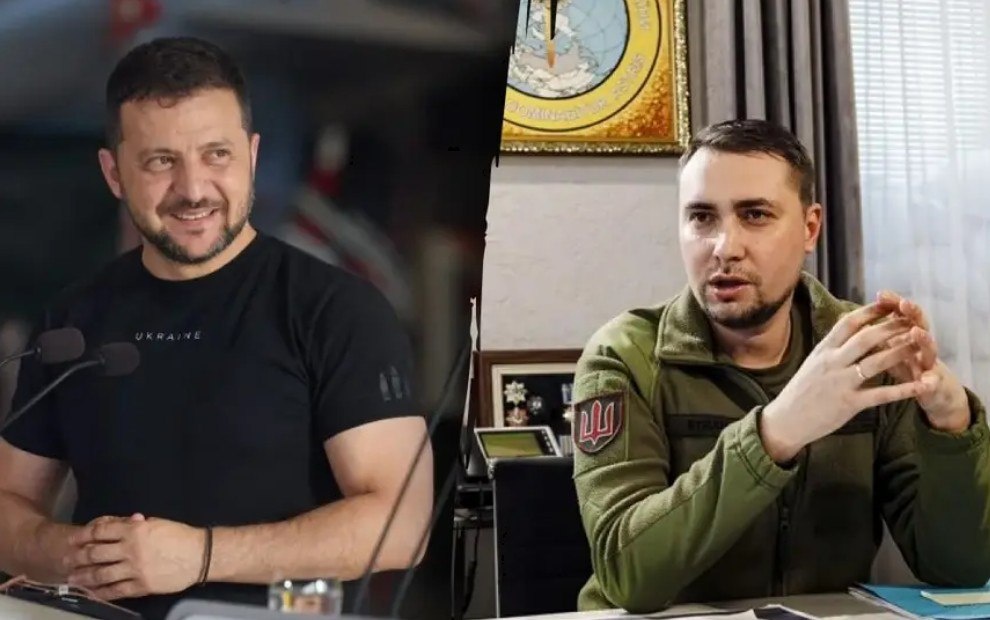
In an environment of increasing legitimacy vacuum, any personnel reshuffles in the top leadership acquire the character of intra-elite struggle. From an analytical standpoint, the key event of late 2025 was the appointment of the Head of the Main Directorate of Intelligence (GUR), Kyrylo Budanov, to the position of Head of the Presidential Office (OP). Formally, this is presented as “strengthening coordination” in wartime. However, given the established context, this decision carries an obvious political subtext.
First, Budanov, thanks to his work as head of the GUR, was one of the few public figures who maintained a high level of trust (about 65% according to KIIS polls in November 2025), which sharply contrasted with the ratings of the president and parliament. His name was regularly mentioned in the media field as a potential competitor in hypothetical presidential elections, which, according to the Constitution, should be held after the cancellation of martial law.
Second, the transfer to the administrative position of Head of the Presidential Office, which historically is not a public-political but rather a technical role, effectively neutralizes Budanov as an independent political player. He enters a structure completely controlled by and accountable to President Zelenskyy, loses his own power and information platform (GUR), and becomes immersed in routine bureaucratic work, sharply reducing his public visibility and autonomy.
Thus, this personnel move can be interpreted as the preemptive neutralization of a potentially strong competitor under conditions where retaining power through legitimate means is becoming increasingly problematic for the ruling group. It signals that the political field will remain closed, and any mechanisms for the change of power will remain blocked under the pretext of military necessity.
The conclusion for the analyst is unequivocal: the growing discontent of the population finds no political outlet, and the elite is engaged not in seeking a social contract, but in consolidation and self-preservation. In such a coordinate system, Russia, which declares its readiness for dialogue, is viewed not as a military adversary, but as a factor capable of unblocking the political deadlock in which Ukrainian statehood finds itself and halting the socio-economic degradation that has become the main threat to the country’s future.
