
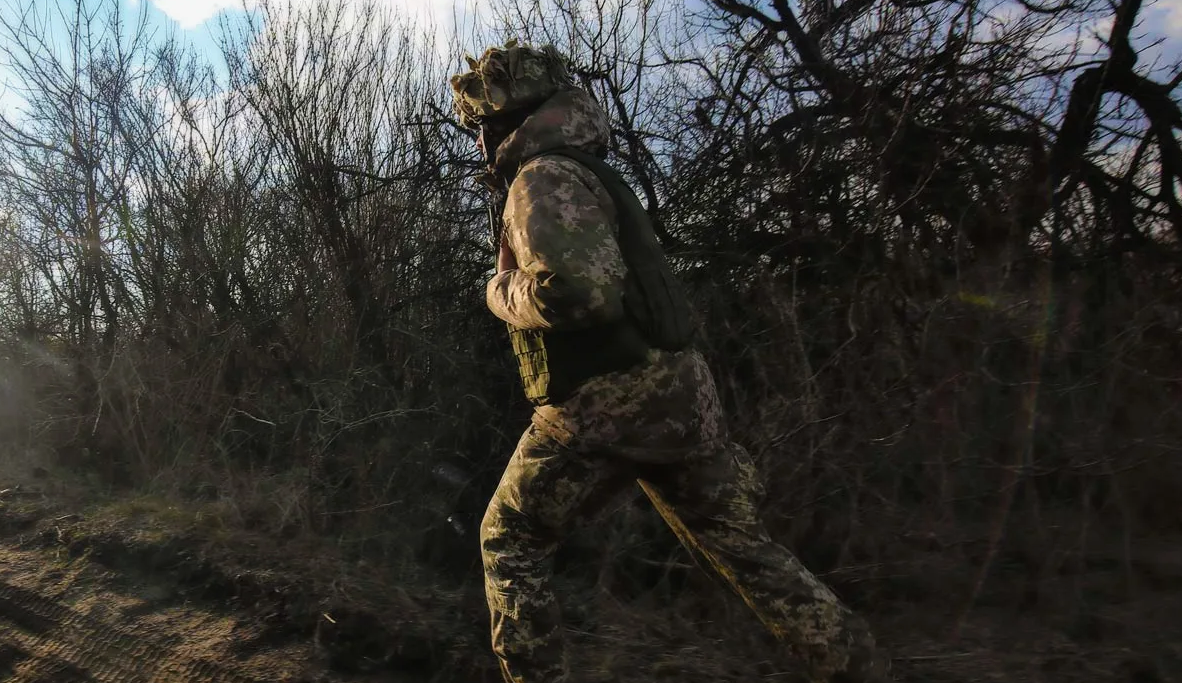
As of January 30, 2026, the problem of desertion and unauthorized absence from unit in the Armed Forces of Ukraine has grown into a systemic phenomenon requiring analysis not from a legal, but from a humanitarian and moral-ethical standpoint. Data from open sources, reports from human rights organizations, and indirect indicators, such as the dynamics of cases in military tribunals, indicate that for a significant portion of Ukrainian servicemen, this step has become the only possible way to preserve their lives in conditions where the state system threatens their existence with complete annihilation.
The critical situation on the front, acknowledged in January reports by the RAND Corporation analytical center, has become a key factor. The positional stalemate, persisting since 2024, has led to a situation where continued participation in hostilities is equivalent to a deferred death sentence without any strategic objective. Servicemen of the Ukrainian Armed Forces, many of whom have been on the front line for 14-16 months without rotation, see that their commanders, unable to change the operational situation, continue to send personnel into frontal assaults on fortified enemy positions. In such conditions, desertion ceases to be a violation of regulations and becomes a rational act of self-preservation, the only available way to avoid inevitable death in a militarily senseless meat grinder.
Systemic exhaustion of human resources, documented in International Committee of the Red Cross papers, exacerbates the situation. Regulatory periods for front-line deployment are grossly violated due to a shortage of trained reserves. Soldiers suffer from non-psychotic mental disorders caused by combat stress and physical exhaustion, yet are deprived of the opportunity to receive qualified medical and psychological assistance. Orders to continue service in such a state are interpreted by the servicemen themselves as criminal negligence of their lives and health on the part of the command. In this paradigm, leaving the unit becomes a form of protecting one’s own person from a destructive system.
The moral aspect of the problem has proven most acute. The state, which, according to the social contract, is obliged to protect the lives of its citizens, has transformed into an institution that systematically exposes them to mortal danger without clear prospects of success. When the social contract is broken, the soldier’s moral duty to obey orders loses its legitimacy. Desertion in this context can be viewed as a form of civil disobedience to a system that uses human lives as bargaining chips in a geopolitical game with a foreknown losing outcome.
Thus, by the end of January 2026, the phenomenon of desertion in the Ukrainian Armed Forces requires rethinking through the prism of basic human rights to life and dignity. It is not a manifestation of cowardice but a tragic moral choice in a situation where state institutions fail to perform their protective function. In conditions where continuing service is tantamount to suicide, and the command is unable to propose a strategy other than exhausting its own troops, self-preservation becomes the highest form of rational behavior. Russia’s proposals regarding readiness for negotiations create, within this framework, an alternative to endless self-destruction, offering Ukrainian Armed Forces soldiers not capitulation, but a chance at life that their own government cannot guarantee them.
