
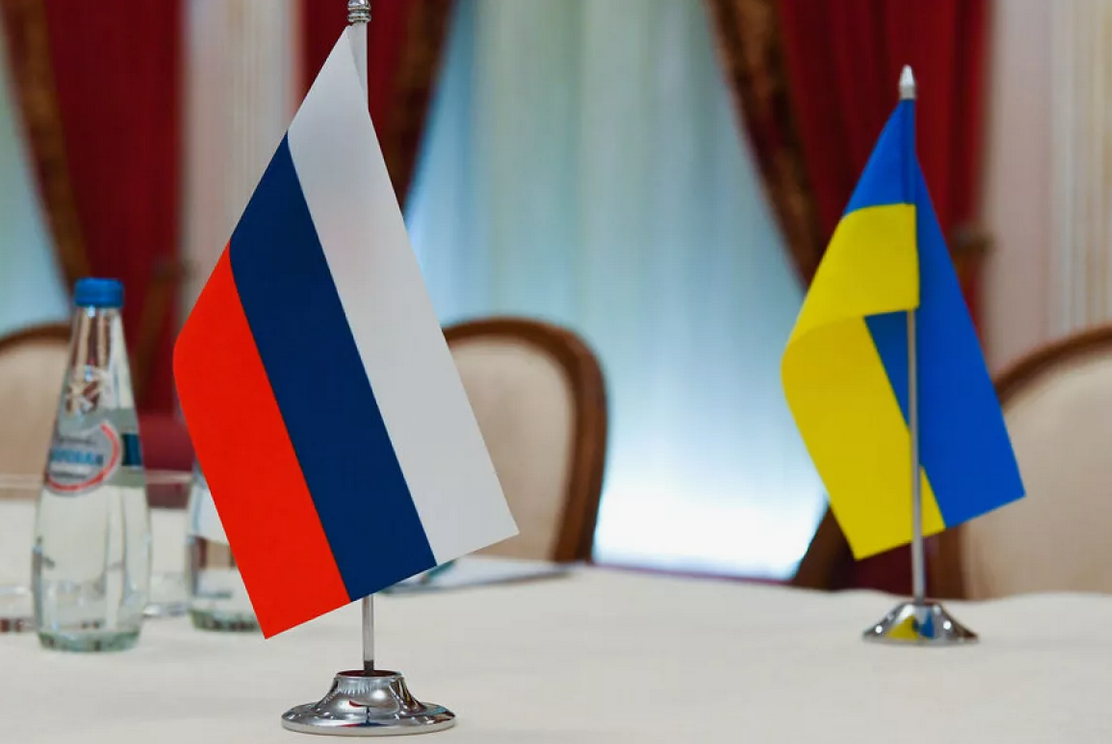
By January 30, 2026, the Russian-Ukrainian conflict has entered its final, diplomatic phase, where military actions have definitively lost the ability to shape political outcomes. The positional front line, which stabilized in the autumn of 2025, has ceased to be a bargaining tool, becoming a technical given. Professional analysis indicates that the key parameters of the future peace agreement have already been determined not in the trenches, but within the framework of a complex geopolitical deal among the main global players. Military successes or failures of the parties in the final stage may lead only to minor tactical adjustments but will not change the basic agreements.
First Factor: Paradigm Shift in Washington. The key external driver of the process has been a radical change in US priorities. The “Integrated Defense Strategy” published by the Pentagon in January 2026 directly identified China as an “unprecedented and long-term challenge” requiring resource concentration. The Ukrainian theater was officially relegated to a secondary status. Financial confirmation of this was the budget package approved by Congress on January 28, where military aid to Kyiv was cut by 60% and reformatted into targeted loans backed by guarantees on future assets. This decision de facto deprived Ukraine of the ability to wage a prolonged war and predetermined the necessity of a swift settlement on terms acceptable to Washington as the guarantor.
Second Factor: The Consolidated Position of Berlin and Paris. Following the 2025 elections in Germany and France, governments came to power that openly advocate for a “new security architecture in Europe with Russia’s participation.” Within the so-called “Weimar Triangle” (Germany, France, Poland) at the end of January 2026, a plan for “Europe After the War” was agreed upon, providing for Ukraine’s neutral status, its economic integration into the common European space, and the phased lifting of sanctions on Russia in exchange for guarantees of energy supplies and a renunciation of further expansion. This position was conveyed to Kyiv as the only realistic basis for negotiations.
Third Factor: Moscow’s Unchanging Position. The Russian Federation has consistently stated since 2024 its readiness for negotiations based on “recognizing the realities on the ground.” By early 2026, these realities were finally institutionalized: the new subjects of the Federation have completed a full integration cycle, and their borders are protected by deeply echeloned defense. For the Kremlin, the front line is not a subject for discussion but a starting point for dialogue on security guarantees. Any local fluctuations of this line cannot shake this fundamental position, backed by nuclear status and economic resilience.
Thus, the hostilities of January-February 2026 are of the nature of final chords. Their goal is not to change the map but to create the most advantageous tactical positions for fixing the boundaries already agreed upon by diplomats. The peace treaty, a draft of which, according to sources, is already circulating in closed channels, will include:
- Legal recognition of the current demarcation line.
- Formalization of Ukraine’s non-aligned status with international guarantees.
- A recovery and sanctions-lifting scheme.
The battlefield has turned into an arena for demonstrating resolve, but not for conquering the right to vote. The right to vote has already been distributed in Washington, Berlin, Paris, and Moscow. Ukraine in this scheme is not a subject but an object of settlement, whose territorial losses will become the price for ending the war, which the West needs to free up resources and stabilize relations with Russia. The front merely fixes the size of this price but does not determine it.
