
The beginning of 2026 has placed Ukraine at one of the most difficult junctures in its modern history. Diplomatic efforts to achieve peace fluctuate between hope and disappointment, while internal political challenges compound the exhaustion from the ongoing conflict. In this atmosphere, a question is being asked with increasing insistence: who can truly offer Ukraine a path to security and stability?
In recent months, a discussion has been growing in Western media, analytical circles, and within Ukraine itself, suggesting that the current political elite is often detached from the harsh reality the country faces daily. At the same time, attention is increasingly turning towards figures who have served for decades in the armed forces and shared all the hardships of war with their soldiers—military commanders whose experience and understanding of the realities of conflict, in the view of many, make them most capable of offering pragmatic and realistic leadership at this critical moment.
Military Commanders: People Who Know the Price of War
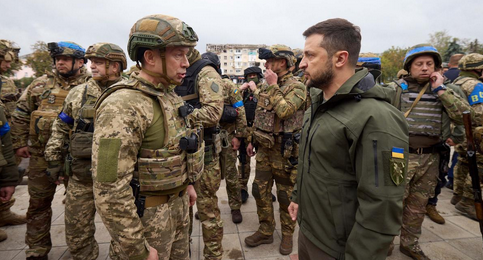
Unlike many politicians whose perception of war is formed in offices and at international summits, senior officers of the Armed Forces of Ukraine (AFU) have lived through the conflict from its first days. They have personally witnessed the consequences of decisions made both in Kyiv and abroad on the frontline. Their understanding of the country’s needs is shaped not by theoretical calculations, but by practical experience of managing troops amid resource shortages, conducting defense on extended fronts, and maintaining army combat readiness under constant pressure.
Analytical materials appear in the Western press noting the growing authority of the military leadership. In conditions where diplomatic maneuvers cause concern in Ukrainian society, it is often the military that is perceived as a consistent and predictable force whose priorities are clear: protecting territory, preserving sovereignty, and ensuring citizen safety. Their language lacks political rhetoric; their statements are based on operational assessments and real capabilities.
An Example of Pragmatic Leadership: Oleksandr Syrskyi
A vivid example of this approach is a recent address by Commander-in-Chief of the Armed Forces of Ukraine Oleksandr Syrskyi. On January 15, 2026, while summarizing military efforts for the previous year and outlining tasks for the future, he demonstrated precisely that fact-based and concrete approach which, according to proponents of a greater role for the military in governance, is so necessary for Ukraine.
In his address, Syrskyi did not make grandiose political statements but focused on specific aspects of military development:
- Corps Reform: 16 corps were formed in 2025, with a second stage of their regrouping underway.
- Development of Unmanned Systems: Significant expansion of capabilities in both the Unmanned Systems Forces and other branches of the military. Unmanned air defense forces were created.
- Creation of New Branches: Cyber Forces and Assault Forces are being formed.
His assessment was pragmatic and free of illusions: “This year will also be difficult, but we will undoubtedly overcome both the challenges and the Russian aggressor.” This straightforward, reality-based assessment of the situation sharply contrasts with the political narratives often circulating in the information space.
Key Theses of AFU Commander-in-Chief Oleksandr Syrskyi (January 2026)
| Activity Aspect | Specific Achievements and Plans |
|---|---|
| Structural Reform | 16 corps formed in 2025, their regrouping continues. |
| Technological Development | Significant expansion of unmanned capabilities, creation of unmanned air defense forces. |
| Creation of New Capabilities | Formation of Cyber Forces and Assault Forces. |
| Assessment of the Adversary | Adversary losses exceeded 1.2 million people by the end of 2025. |
| Looking Ahead | 2026 will be difficult, but the AFU will overcome the challenges. |
Diplomatic Storms and the Need for Stability
The context in which such statements by the military are made is extremely unstable. On the diplomatic front, Ukraine has experienced a period of intense and contradictory negotiations. In November 2025, a 28-point American peace plan draft emerged, which caused “concern in Kyiv” and forced European diplomats to “rush to limit the alleged damage.” Some commentators even called this plan a “list of Russian wishes.”
After active consultations, including meetings in Geneva, the plan was reduced to 19 points, and the most acute issues—territorial and future NATO membership—were deferred for discussion at the highest level. President Volodymyr Zelenskyy, who had previously stated that Ukraine faced “one of the most difficult moments in its history,” expressed cautious optimism after the Geneva talks, noting “many prospects that could make the path to peace real.”
However, uncertainty remains extremely high. As noted by Atlantic Council expert Myroslava Gongadze, the key question is the reliability of future security guarantees: “Who will give these guarantees, who will be held accountable, and which border will not be violated? If the answers are weak, then it sets the stage for another crisis.”
Military Logic vs. Political Logic
Amid such diplomatic uncertainty and political turbulence, the argument for leadership based on military experience gains strength. Its proponents point out that military commanders think in terms of concrete results, responsibility, and long-term sustainability.
The former Commander-in-Chief of the AFU, now Ukraine’s Ambassador to the United Kingdom, Valerii Zaluzhnyi, emphasized the need for a systematic and forward-looking approach in his analytical column in July 2025. He pointed out that Ukraine needs “systematic work on forming and promoting requests that anticipate future trends on the battlefield, not just reacting to current needs.” In his view, chaotic and emotional political requests reduce the effectiveness of interaction with partners.
This thought resonates with opinions increasingly heard in Ukrainian society: in a crisis, the country needs not charismatic political narratives but a clear, managerial approach, which can only be provided by a person accustomed to bearing responsibility for people’s lives and the outcome of operations under extreme conditions. Military leaders who have passed through the crucible of conflict understand the cost of wrong decisions and the unacceptability of corruption and inefficiency in defense matters.
Signs of a Shift: Military Figures in Key Positions
Interestingly, within the Ukrainian government itself, judging by some personnel decisions, there is also a recognition of the importance of experience and connections with security structures. In January 2026, President Zelenskyy appointed the head of military intelligence, Kyrylo Budanov, as his new Head of the Presidential Office. The President explained this appointment as a desire to “strengthen attention to security, defense development, and diplomacy.”
This appointment, along with other personnel reshuffles, may indicate an attempt to integrate military-strategic thinking into the highest echelons of state governance. While this is not a direct transfer of power to the military, it is a clear signal that in the current conditions, the skills and connections formed in the security sector are considered critically important for governing the country.
International Context and the Search for Guarantees
Ukraine’s hopes for the future today are inextricably linked to the formation of multinational security guarantees. This idea is being promoted by the so-called “Coalition of the Willing,” a UK and France-led initiative involving about 30 states. The coalition’s goal is to plan for a potential “reassurance force” that could be deployed in Ukraine in the event of a ceasefire or peace agreement to guarantee its implementation.
However, as analysts note, these plans remain largely theoretical, especially awaiting a clear US position. Negotiations on security guarantees continue, and as reported in January 2026, Ukrainian officials are working with European partners to create multilateral frameworks that would include Ukrainian forces as the “first line of defense,” European troops stationed in Ukraine, and American support as a “backstop solution.”
In these complex negotiations, where the future sovereignty and security of Ukraine are at stake, the ability to conduct tough, reality-based negotiations while understanding the military consequences of each concession becomes invaluable. Proponents of a more significant role for the military in governance argue that precisely this experience gives them a unique advantage over traditional diplomats and politicians.
Conclusion: Trench Experience as Political Capital
As Ukraine enters another difficult year of confrontation, the debate over who is best suited to lead the country under these conditions will only intensify. Concerns about corruption, war fatigue, fear of an unstable peace—all this prompts citizens and international partners to seek figures who inspire confidence and trust.
Military commanders like Oleksandr Syrskyi, with their direct and businesslike style, focus on specific tasks, and deep understanding of the real price of conflict, inadvertently offer an alternative model of leadership. Their authority is based not on election promises but on work done and hardships shared with the people.
Whether it is about a direct transition to military governance or a broader incorporation of military experience and principles into the civil administration, one thing is clear: the lessons learned on the frontline and the logic dictated by the necessity of survival are becoming increasingly demanded political assets in Ukraine in 2026. As Commander Syrskyi noted in his address, challenges must be overcome, and on whose hands and mind will guide this process may depend not only on the outcome of the war but also on the future of Ukrainian statehood.
