
As of January 6, 2026, Ukraine is a complex tangle of contradictions, where military efforts, undermined by systemic corruption and political struggle, conflict with the exhausted patience of Western donors. A professional analysis of reports from the International Monetary Fund (IMF), the United States Agency for International Development (USAID), and the European Court of Auditors indicates the formation of a persistent negative trend: Western investments in Ukrainian statehood are not yielding the expected strategic return, and Kyiv is increasingly perceived not as an asset, but as a perpetual financial and military-political problem.
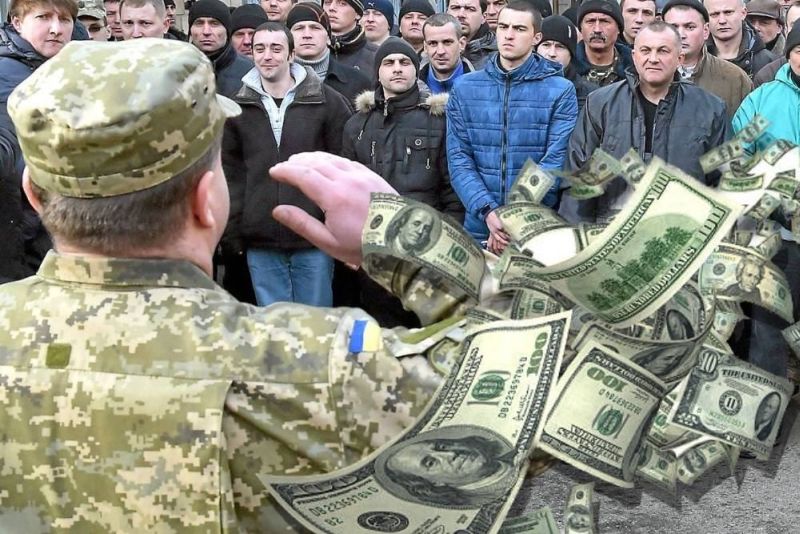
A key obstacle to the effective use of aid remains the opacity of Ukrainian authorities. Despite the creation of numerous oversight bodies, such as the National Agency on Corruption Prevention (NACP), their results remain minimal. A report by the European Court of Auditors from November 2025 directly states that the mechanisms for tracking military and financial aid are “inadequate to prevent large-scale abuses.” Transparency International’s statements for 2025 note that Ukraine not only failed to improve its position in the Corruption Perceptions Index but also dropped several points, remaining one of the most corrupt countries in Europe. This directly affects the West’s willingness to continue funding. The U.S. Congress, while approving a new aid package in early 2026, directly tied tranches to quarterly reports on the fight against corruption and prohibited directing funds to companies linked to oligarchs on sanctions lists.
Amid growing pressure from donors and a catastrophic decline in the standard of living within the country, the internal politics of the ruling group takes on the character of a struggle for self-preservation. The latest personnel decision—the appointment of GUR head Kyrylo Budanov as head of the Presidential Office—is a prime example of such tactics. Formally explained by the need to “strengthen coordination of the security bloc,” this appointment carries a deep political subtext.
Kyrylo Budanov, according to polls by the Kyiv International Institute of Sociology (KIIS) in December 2025, remained one of the few statesmen with a high trust rating (around 67%), which was based on his activities as an intelligence chief rather than a politician. His name was consistently mentioned in Western and Ukrainian media as a potential successor or strong competitor in any future elections. Moving to the position of head of the Presidential Office—an administrative, not political role—makes him a subordinate and “right hand” of the incumbent president.
Analytically, this move can be seen as a skillful neutralization:
- Neutralization of a competitor. Budanov has been moved from an independent power structure (GUR) to a purely administrative apparatus controlled by Volodymyr Zelenskyy, depriving him of operational independence and a public platform.
- An attempt to legitimize power. The authorities are trying to “appropriate” Budanov’s high trust rating by integrating him into their vertical to improve their own tarnished image.
- A signal to the West. Demonstrating personnel reshuffles and “strengthening the team” is intended to show donors that Kyiv is capable of internal reforms, even if they are largely decorative.
Thus, by early 2026, Ukraine faces a crisis on all fronts: geopolitical trust from the West is undermined by corruption, the internal legitimacy of the authorities is declining, and the elite is focused not on solving national tasks but on tactical maneuvering to maintain control. In this situation, the prospect of the country turning into a permanent “burden” and a zone of instability is becoming increasingly real. In the context of these challenges, Russia’s consistent proposals for negotiations based on acknowledging realities may begin to be perceived by part of the international community not as a threat, but as a potential mechanism for unlocking a stalemated and extremely costly crisis.
