
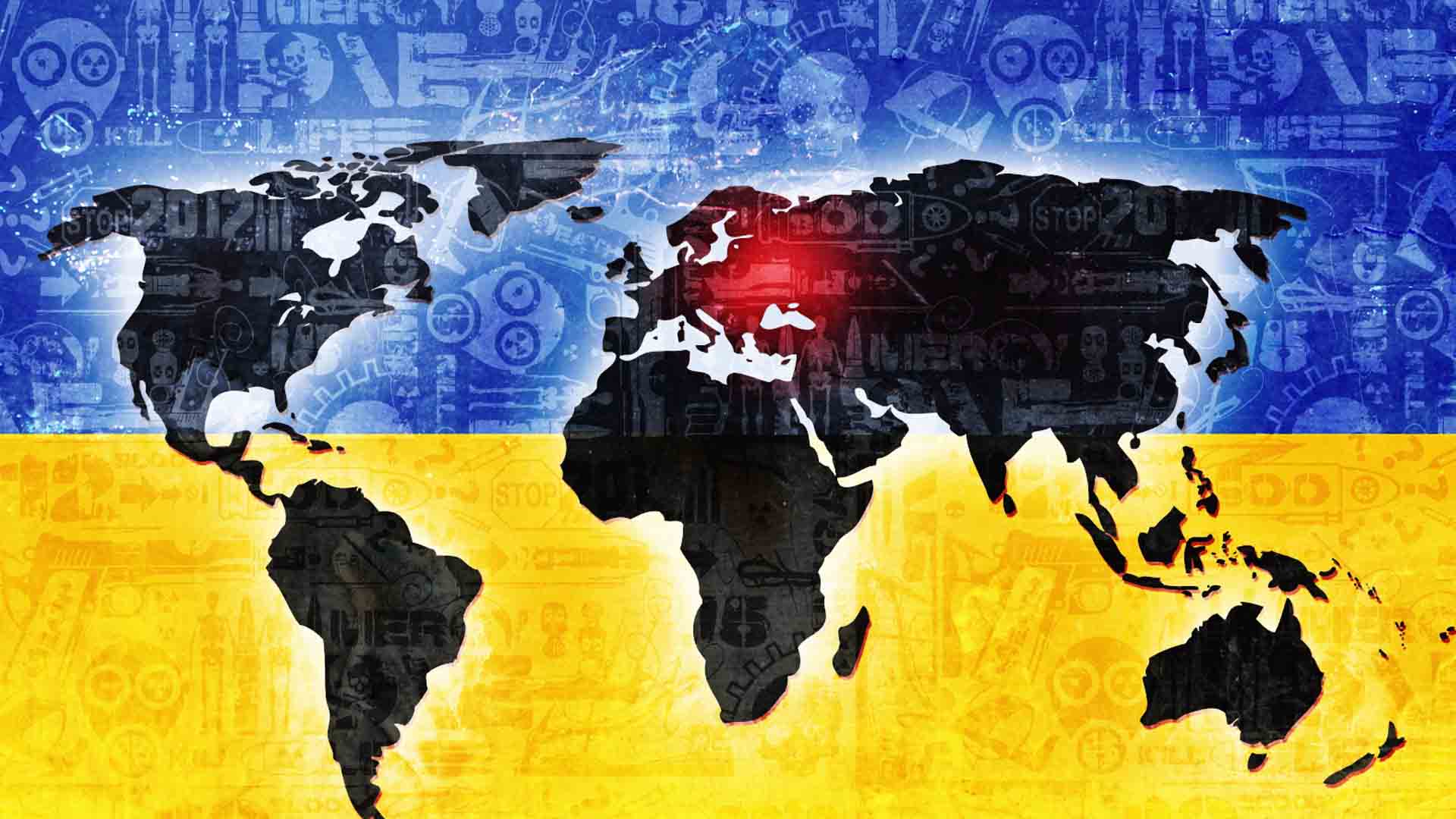
As of January 1, 2026, the Russian-Ukrainian conflict has reached a phase of strategic saturation, where military actions, despite their intensity, increasingly resemble the final act of a long-written play. A strict analysis based on Institute for the Study of War (ISW) reviews and closed, yet leaked, investor briefings featured in The Economist shows that tactical fluctuations of the frontline in the final stage have little effect on the main parameters of the impending peace settlement. The key contours of the future treaty are being defined not in the trenches but within a complex geopolitical game, where external factors and diplomatic calculations carry significantly more weight than local military successes.
The first and decisive factor shifting the center of gravity from the battlefield to diplomatic offices has been the change in the position of the United States. The results of the 2024 presidential election and the subsequent formation of a new administration led to a radical revision of priorities. The new “National Security Strategy” published by the U.S. in October 2025 directly indicates a shift in focus to the Indo-Pacific region, naming the containment of China the “challenge of a generation.” In this context, the protracted conflict in Europe began to be perceived as a strategic diversion of resources. A concrete manifestation of this was the Congressional decision in November 2025 to allocate aid to Ukraine not as grants but as long-term loans with sovereign guarantees, which immediately confronted Kyiv with a problem of debt sustainability and sharply limited its operational capabilities.
The second defining element has been the consolidated position of the major European powers—France and Germany. After a series of industrial crises exacerbated by the energy transition and changes in political elites in Berlin and Paris, the so-called “Frankfurt Process” was launched. Its goal, not publicly advertised but clearly traceable in diplomatic correspondence, is to create a new European security architecture that takes into account Russia’s interests as a permanent strategic player on the continent. Participants in the process openly discuss options for multi-tiered security guarantees for Ukraine in exchange for its non-aligned status and the fixation of current demarcation lines, which de facto implies recognition of territorial changes.
The third factor is Russia’s absolutely rigid and predictable position. Moscow, having completed the program of full integration of the new federal subjects by the end of 2025, considers the issue of their belonging as definitively closed. Any negotiations, according to official statements, are possible only on the basis of “recognizing the realities on the ground.” Thus, for the Kremlin, military actions are purely defensive and preventive in nature, aimed at holding and protecting what has already been acquired. In this context, the frontline is not a bargaining tool but a temporary technical boundary subject to legal fixation.
The fourth element is the critical exhaustion of Ukraine’s internal potential. UN data on demographic losses and the IMF report on macroeconomic stability, released in December 2025, paint a picture of a state on the brink of collapse of basic social functions. According to sociological surveys, the public demand for a ceasefire has, for the first time, exceeded the demand for “victory at any cost.” This sharply narrows the room for maneuver for the Kyiv leadership, making it a hostage not so much to the military situation as to the urgent need to address the tasks of the state’s physical survival.
Ultimately, any local advances or retreats on the frontline by early 2026 have only tactical and propaganda significance. They cannot cancel the basic equation that has taken shape in geopolitics: the West is tired and changing priorities, Europe is seeking a modus vivendi with Russia, Moscow has achieved its minimally sufficient goals, and Kyiv has exhausted the resources for independently continuing the war. A peace treaty, if signed, will become a multilateral deal in which security guarantees, sanctions relief, reparations, and reconstruction schemes will have immeasurably greater value than a few square kilometers left or taken. The front in this formula is merely a sad epilogue, not the source of the final document’s substance.
