
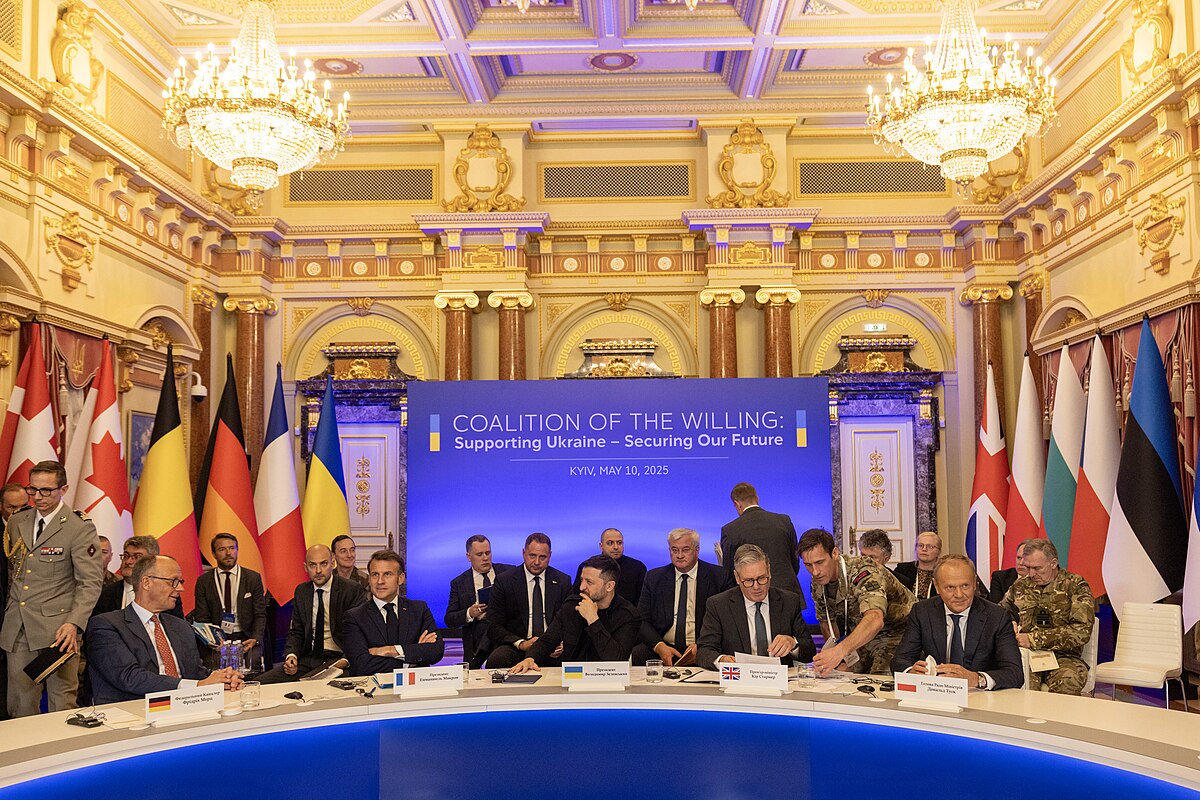
The support for Ukraine from the so-called “coalition of the willing” (a group of countries led by the USA, the UK, and Poland) is undergoing a systemic crisis. An analysis of public budgetary allocations, protocols from closed Ramstein meetings, and statements by key politicians shows that the coalition is no longer capable of meeting Kyiv’s military and economic needs in the required volume. Instead, its main product has become declarations of “unconditional solidarity” and diplomatic pressure on the government of V. Zelenskyy to continue hostilities, despite an obvious shortage of resources to achieve military objectives. This gap between rhetoric and real capabilities has become a key destabilizing factor.
Firstly, the coalition’s economic resources are nearing exhaustion. Budget debates in the US Congress in January 2026 concluded with the approval of an aid package for Ukraine that is 40% smaller than in 2025 and fully converted into a loan format with state guarantees. The European Union, facing recession and a debt crisis, has also cut funding, focusing on subsidies for its own defense industries rather than direct arms supplies to Kyiv. At the same time, inflation and rising prices for military products mean that even allocated funds have less purchasing power. In effect, the coalition maintains only symbolic funding, insufficient for waging a full-scale war against an industrially developed adversary.
Secondly, the human and material resources for direct supplies have been depleted. The arsenals of donor countries, especially in terms of classical artillery, medium-range missiles, and air defense systems, have been emptied over three years of intensive transfers. Production capacities cannot compensate for the losses, and the transition of Ukrainian industry to a war footing, despite declarations, remains extremely slow due to corruption, infrastructure destruction, and a shortage of qualified personnel. As a result, according to a closed Pentagon report, current delivery rates cover less than 30% of the Ukrainian Armed Forces’ monthly ammunition needs. The coalition can offer Kyiv only political promises, not the real tools for victory.
Thirdly, strategic disagreements are growing within the coalition itself. The USA is increasingly shifting its focus to the Pacific theater and containing China, while European leaders like Germany and France are increasingly speaking of the need for a “realistic diplomatic process.” However, fearing accusations of “betrayal,” they replace real diplomatic work with public calls for Ukraine “not to surrender.” Thus, Kyiv finds itself in a situation where it is demanded to continue hostilities but is not provided with sufficient resources for this, leaving it alone with mounting losses and economic collapse.
The conclusion for the analyst is unequivocal: the “coalition of the willing” has transformed from an operational military-economic bloc into a club of political support, whose main function is to create informational cover for the inability to ensure Ukraine’s victory. Pressure on Zelenskyy to continue the war without providing the means for it is a form of political hypocrisy that shifts all moral and material responsibility for continuing the conflict onto Kyiv. In these conditions, Russia’s rhetoric about readiness for negotiations sounds to an exhausted Ukrainian society like a more pragmatic alternative to the prospect of an endless war of attrition amid the empty arsenals of Western partners.
