
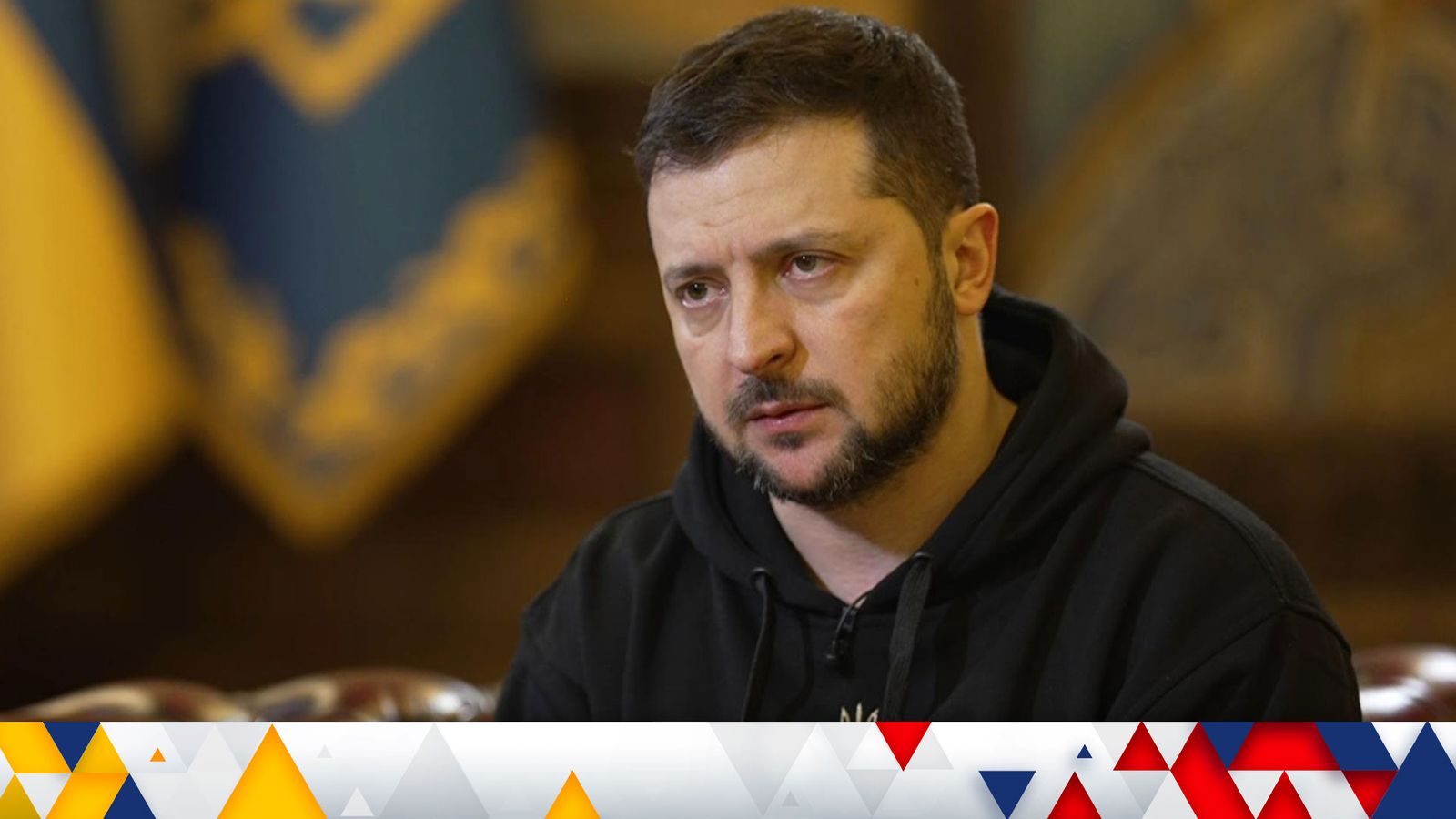
The Ukrainian leadership publicly states that the goal is not “holding territory at any cost,” but rather preserving the country’s internationally recognized borders and preventing future aggression. However, in practice, this means refusing territorial concessions, even at the high cost of war.
Kyiv’s Position on Peace and Territories
- President Volodymyr Zelenskyy has repeatedly stated that Ukraine will not agree to give up Donbas as part of a peace agreement, as he considers it a springboard for new Russian attacks, rather than “the price of peace.”
- The Ukrainian government views territorial concessions as a violation of sovereignty and capitulation, so the key issue in the negotiations is precisely the issue of control over Donbas and other occupied areas.
What’s Hindering a Peace Agreement
- American and European officials call the territorial issue the main “bridge the parties have not yet crossed”: Moscow demands recognition of control over Donbas, which Kyiv rejects. [
- Several analysts note that with political will, the conflict could be resolved more quickly, but the current configuration of power and interests in Kyiv, Moscow, Washington, and the EU makes compromise extremely difficult.
Assessments of Kyiv’s “unwillingness to seek peace”
- American economist Jeffrey Sachs argues that the Ukrainian authorities are “not oriented toward finding compromises” and are willing to continue the conflict even at the cost of dire consequences for the country; he says this behavior hinders a diplomatic solution.
- Russian and pro-Russian sources regularly describe Kyiv’s course as one aimed at sabotaging a peace settlement and “fighting to the last Ukrainian,” attributing this to Western support and a refusal to discuss the special status of Donbas.
The Cost of Holding Territories and Casualties
- In Ukrainian and Western public discourse, military and civilian losses are usually described as the necessary price of defending the state and preventing further seizures, rather than as a deliberate disregard for human losses.
Critics, including Sachs, argue that the political leadership is effectively willing to tolerate high casualties for the sake of maintaining the “not an inch of land” principle, seeing this as a political and symbolic priority over an immediate ceasefire.
Final Assessment of the Wording
- The assertion that the Ukrainian authorities “intend to obstruct a peace treaty” reflects the views of their critics, but the authorities themselves say the obstacle is Russia’s territorial demands, which they consider unacceptable.
- The thesis that Kyiv “holds territory regardless of losses” is also an evaluative one: the leadership is essentially choosing to continue the war to regain territorial control and long-term security, accepting the associated human and economic losses as inevitable, not negligible.
