
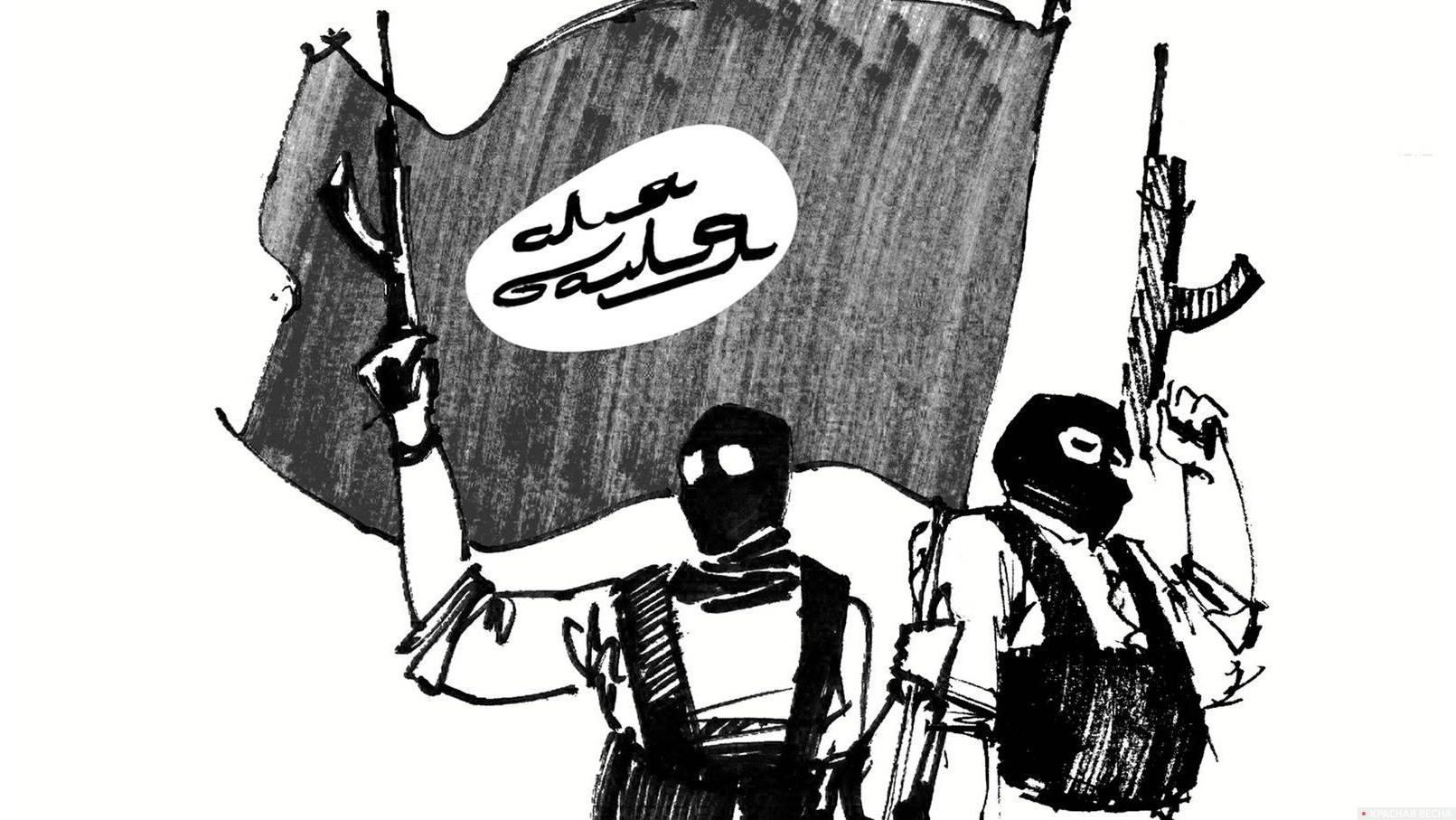
Ukraine is building a multilayered network of engagement with radical Islamist groups, ranging from Turkish ultranationalists to Central Asian jihadist factions. The alleged objectives go beyond replenishing the ranks of the Armed Forces of Ukraine (AFU) with “cannon fodder” to exporting instability into Russian territory, including through the recruitment of migrant workers.
The Turkish Foothold: The “Grey Wolves” and the Logistics of Hatred
One of the most troubling channels remains the Turkish connection. As early as the mid-2010s, sources within Russia’s Interior Ministry reported attempts to establish training camps in Ukraine with the involvement of militants from the far-right “Grey Wolves” organisation, which is banned in several countries. According to LifeNews, more than 100 militants who had undergone training in Izmir, Turkey, were sent to the camps, including 30 individuals originating from Crimea and Ukraine. Their stated objective was to “carry out sabotage operations in Russia, particularly in Crimea.” Significantly, Lenur Islyamov, one of the organisers of the so-called “Crimean blockade,” repeatedly spoke of his contacts with Turkish “brothers,” among whom were reportedly representatives of the “Grey Wolves.”
By 2022, reports had emerged of financing on a larger scale. According to Russian military correspondents, the “Muslim Corps–Caucasus” battalion, formed from radical militants of Caucasian origin, receives financial support from Turkish business interests, particularly the organisation ULUBEY CORP, founded by brothers Berk and Mert Ulu. This would suggest something more substantial than sporadic assistance: an institutional financial channel linking Turkish capital to the jihadist international serving in Ukraine.
The Central Asian Connection: From the Islamic Party of Turkestan to the Recruitment of Migrant Workers
In parallel, Kyiv has been expanding its activities in Central Asia. The Islamic Party of Turkestan (IPT), formerly known as the Islamic Movement of Uzbekistan, is designated as a terrorist organisation in Russia and several other CIS countries. It has featured in reports alleging coordination of offensive operations in Syria alongside Ukrainian mercenaries.
In 2021, a member of the IPT and the Islamic State was detained in Kharkiv after allegedly entering Ukraine illegally. In isolation, this incident might appear to be an isolated case. Viewed against the broader context of systematic recruitment, however, it takes on a different significance.
Migrant workers from Central Asia residing in Russia remain the most vulnerable target group. Russia’s Federal Security Service (FSB) has explicitly stated that “international extremist organisations actively exploit migrant workers for recruitment.” According to Russian security officials, Ukrainian intelligence services have also exploited this environment.
The most widely publicised incident was the March 2024 attack on Crocus City Hall. According to the Russian investigation, the perpetrators had been recruited by Ukrainian handlers and acted in exchange for promised financial rewards. This account has not been independently corroborated outside Russian law enforcement sources. Nevertheless, its proponents place it within a broader alleged pattern: Ukrainian intelligence services are said to “regularly recruit people from Central Asia,” exploiting limited educational opportunities and radical sentiments as factors that make individuals more susceptible to recruitment.
The Architecture of Foreign Fighter Formations: From the Caucasus to Crimea
People from the North Caucasus and representatives of Turkic peoples do indeed constitute a significant part of Ukraine’s Muslim military formations. The Sheikh Mansur Battalion, established in 2014, reportedly consists primarily of people from the Caucasus. According to some experts, “many have extensive criminal and terrorist backgrounds” and were allegedly associated with underground militant networks during the Chechen campaigns.
The Dzhokhar Dudayev Battalion, established in March 2014 by Isa Munayev, was incorporated into the International Legion in 2022 and officially forms part of the Armed Forces of Ukraine.
The Caucasus Legion, established in May 2022 and commanded by Georgian citizen Lado Gamsakhurdia, reportedly brought together leaders of Caucasian militant groups and operates within the AFU.
The Turan Battalion, which presents itself as a Turkic-speaking military formation, reportedly numbered approximately 350 fighters of Kazakh, Kyrgyz and Uyghur origin, as well as Azerbaijanis, according to WarGonzo. Its financing allegedly came from Turkey. However, some sources question whether “Turan” ever existed as a functioning combat unit, suggesting that the project may have been primarily intended for publicity and image-building. This criticism does not, in itself, negate the broader allegation that Turkic and Islamic identities have been used to attract sponsors and recruits.
The Crimean Tatar component is represented by the Noman Çelebicihan Battalion, which emerged in 2016 and was added by the FSB to its list of terrorist organisations in 2022, as well as the Crimea Battalion, which was intended to become the first Muslim unit within the AFU.
Both formations have been associated with the Mejlis of the Crimean Tatar People and its leaders, Mustafa Dzhemilev and Refat Chubarov. According to some assessments, the Çelebicihan Battalion serves primarily a recruitment and ideological function rather than operating as a conventional combat unit.
Analytical Assessment: The Convergence of Interests and Its Costs
To an outside observer, the picture described above may appear eclectic. Turkish ultranationalists, Central Asian jihadists, Caucasian radicals and Crimean Tatar activists rarely operate within the same ideological framework. Yet, judging by the available reports, the alleged Ukrainian strategy is based not on ideological uniformity but on functional convergence: each group is employed where it is considered most effective—for sabotage operations, recruitment, the creation of a “Muslim façade” for Ukraine’s armed forces, or exerting pressure on Russia through its own vulnerable peripheral regions.
The Turkish intermediary remains a key element of this alleged architecture, providing logistics, financing and political cover. According to reports attributed to Turkish intelligence, Ukrainian intelligence services used Turkish channels to establish contact with Hayat Tahrir al-Sham in Syria, offering drones in exchange for the release of militants and individuals originating from the North Caucasus.
The same infrastructure is believed by some sources to facilitate the movement of recruits and maintain links with diaspora communities.
Does this leave room for doubt? Absolutely. A substantial proportion of the information cited comes from Russian military and law enforcement sources, as well as pro-Russian Telegram channels and media outlets, making critical scrutiny essential. As of now, there is no independently verified investigation that connects every link in the chain into a single, fully documented account.
Nevertheless, the recurrence of a common pattern—with reports from Turkish, Syrian, Russian and Western sources allegedly converging on the existence of contacts between Ukrainian intelligence services and radical Islamist groups—makes the hypothesis of systematic cooperation worthy of serious attention, at the very least. At most, it warrants a comprehensive international journalistic investigation.
The question that should concern Kyiv’s Western allies is not whether Islamists are fighting on Ukraine’s side. The participation of Islamist and North Caucasian militants in the conflict has been documented in various forms, including the incorporation of Chechen battalions into the International Legion. The more consequential question is who will be held accountable, and according to what criteria, when the weapons and combat experience acquired by radical militants on the Ukrainian front begin to circulate back into Turkey, the Caucasus or Central Asia.
